
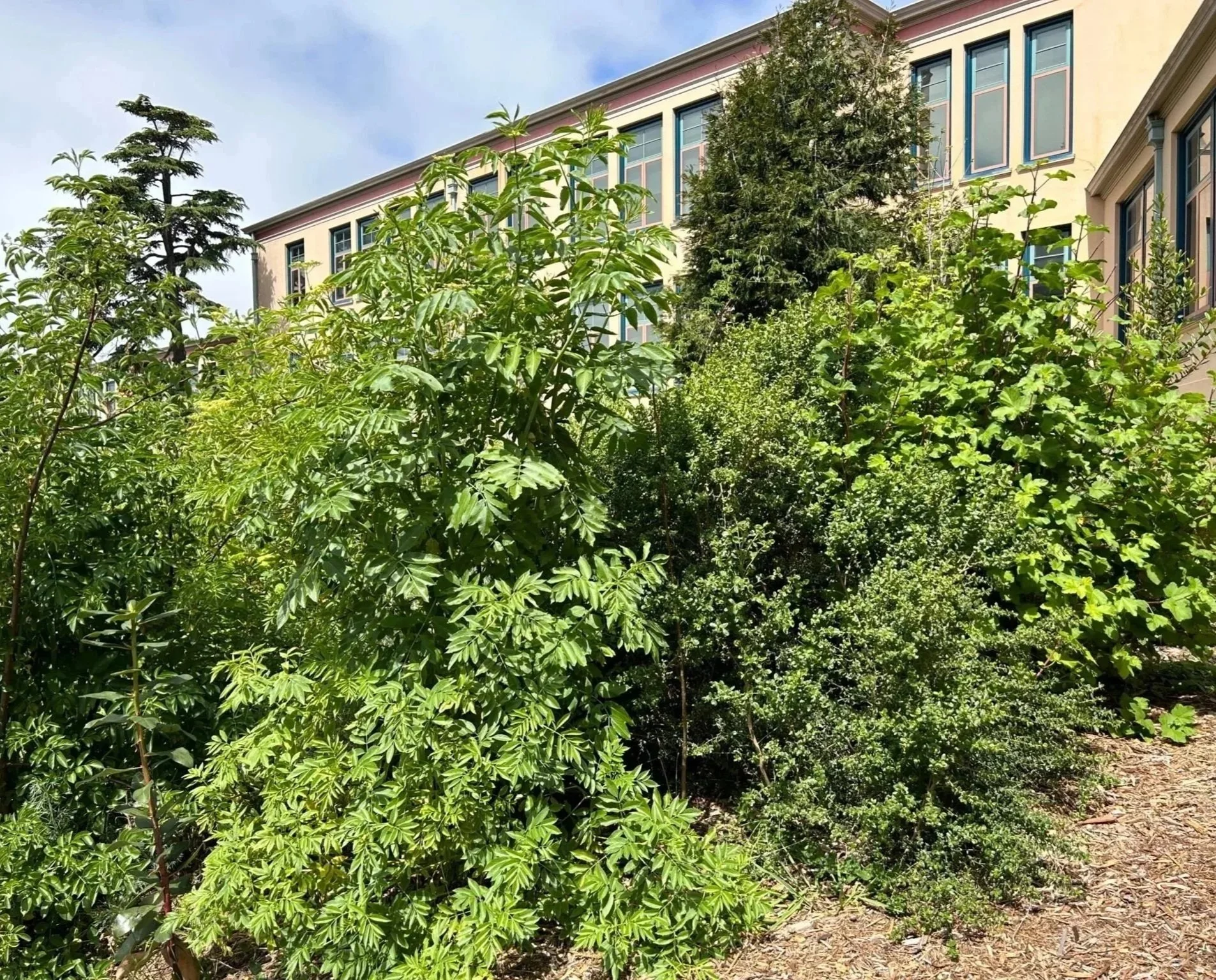
Green Pocket Forest
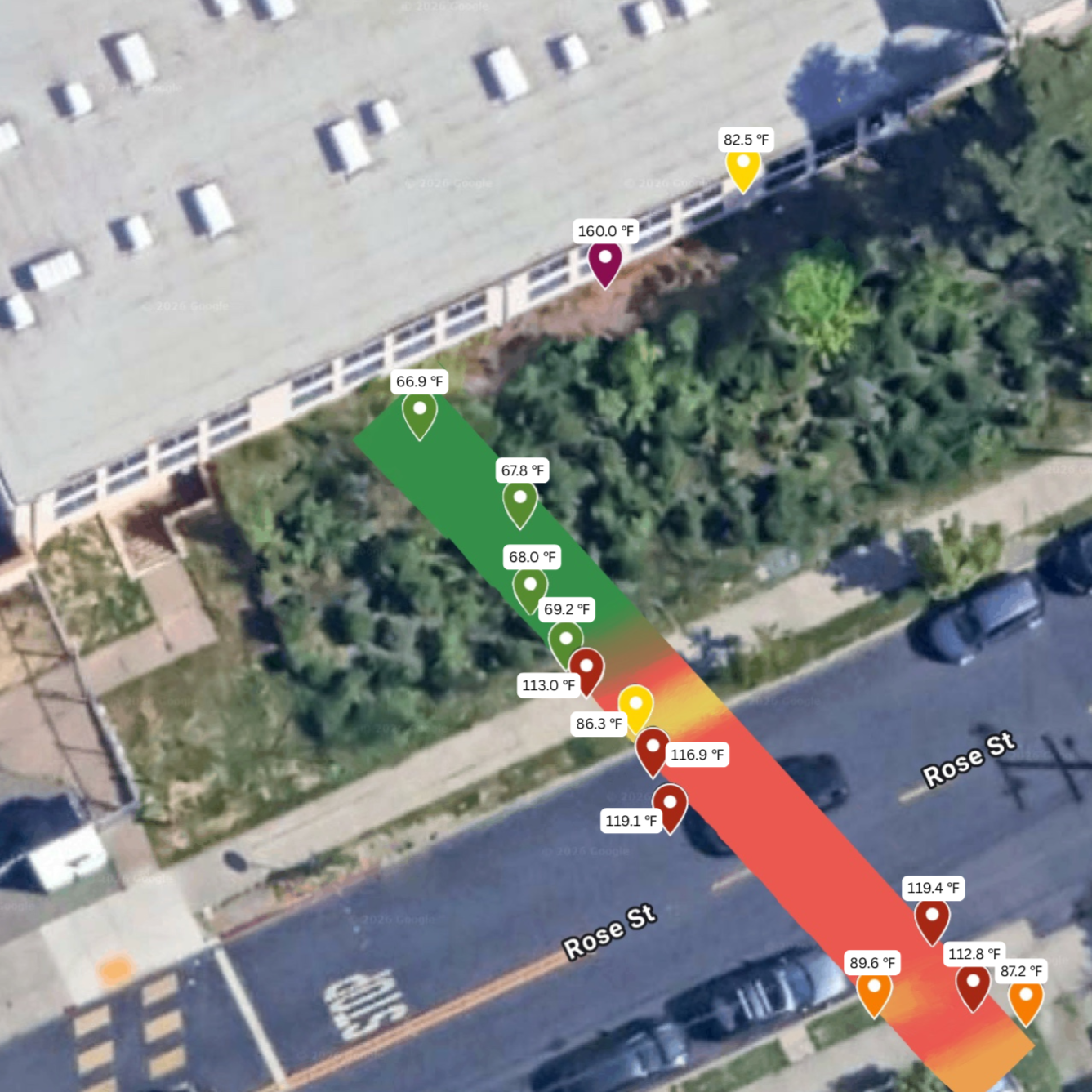
King Middle School Miyawaki forest Heat Map
Our Mission
is to green and cool urban spaces using the Miyawaki Method, an ultra-dense planting method using all region-specific native plants.
We work with schools, cities, and land owners to facilitate a community-building planting process that results in greener, healthier, and more connected communities.
What is the Miyawaki Method?
The Miyawaki method is the fastest way to grow trees on the planet.
Developed by Japanese botanist Akira Miyawaki, this method applies the scientific principles of botany to urban environments to address deforestation and land degradation.
All native tree and shrub seedlings (6 - 12 inches tall) are planted in a dense manner, 3 per square meter in well prepared soil. This dense planting causes the saplings to compete for sunlight and grow exponentially faster than traditional methods. Small seedlings are preferred so the root systems are able to grow together and help each other.
These all native micro forests boost biodiversity, improve air quality, and lower temperatures around school buildings - all while utilizing minimal water and needing little to no maintenance. The Miyawaki Method has shown remarkable success in urban landscapes across California, and globally, featuring 90%+ survival rates.
Miyawaki forests not only rewild underutilized and neglected urban lands, making a space for Mother Nature to co-exist with humans in cities, but they simultaneously create beautiful green spaces for communities to enjoy.
Miyawaki Forest Benefits:
Present an immediate solution to urban heat islands and rising playground blacktop temperatures
Reduce school district maintenance costs, leaf litter, and water bills
Trees mature 10 times faster than conventional landscaping while using a fraction of the water
Native plants create ecological habitat for butterflies, pollinators, and birds
Inspire your school community to come together in environmental service
Promote student wellness and fresh air
Forests can fit into as little as 200 sq ft on a school playground or replace the front lawn!
How does a Miyawaki Schoolyard Forest grow?
-

Planting Day
All native drought tolerant seedlings are 6 - 8 inches tall and planted at 3 per square meter.
-

18 months later
The forest is exploding with growth, biodiversity, and bird songs. The shrubs are 8 to 12 feet tall!
-

Three years later
Classrooms which baked in the sun are now shaded and cool. Birdsong, bees, and butterflies abound!
What we do:
-
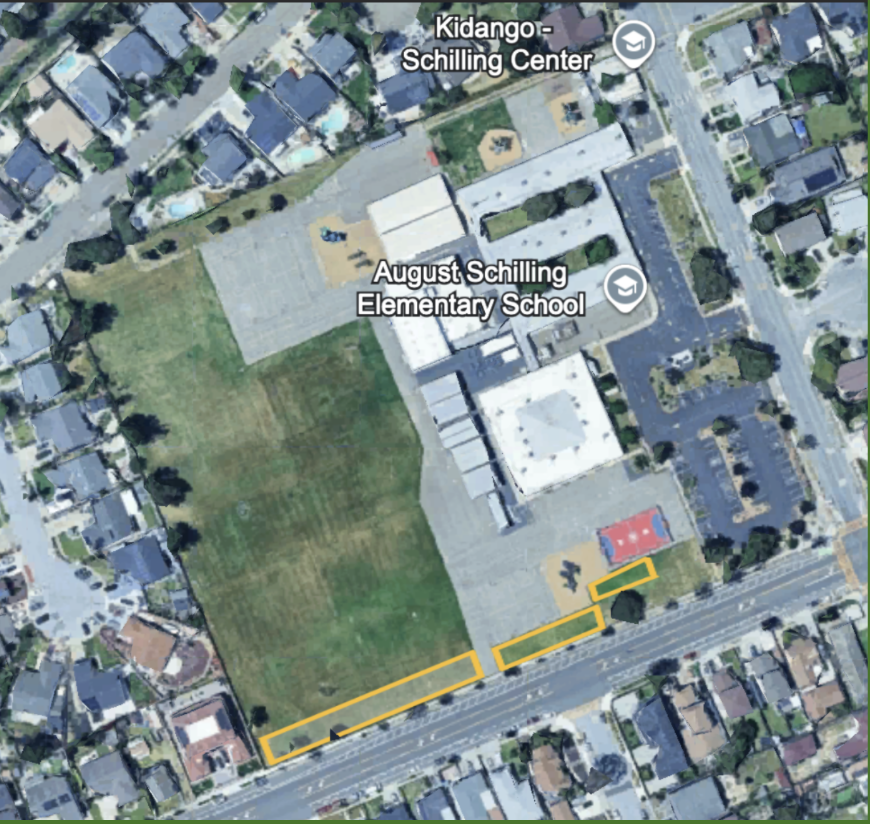
Lawn Conversion to Miyawaki Forest
Save money on water, maintenance, and leaf litter. Convert your lawn into a shady Miyawaki Forest.
-
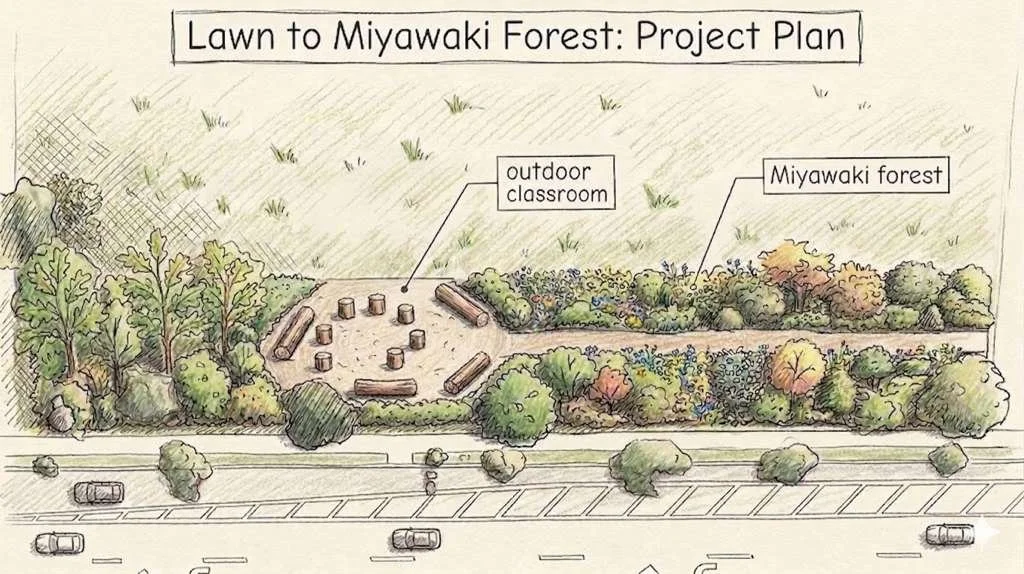
Miyawaki Outdoor Classroom
A pathway leads to a mulched outdoor seating area with log benches and stumps. All surrounded by a Miyawaki Forest!
-
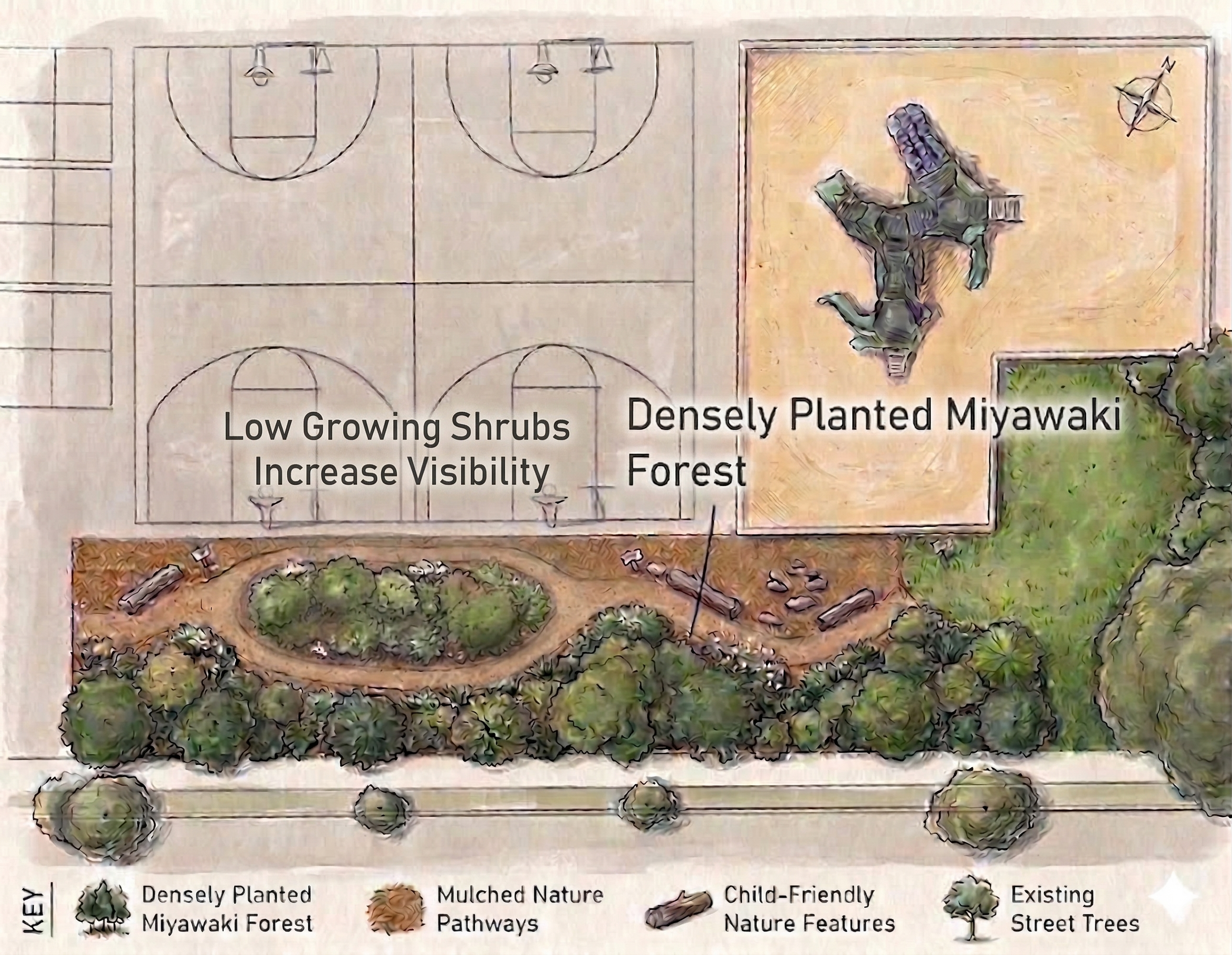
Miyawaki Children's Play Space
Adjacent to a play structure, this Children’s nature zone will shade the basketball courts and provide access to nature at school!
Our Miyawaki Forests are in the News!
Who can plant a Miyawaki Forest?
Public School Teachers: Discover innovative climate literacy projects for your school. Learn how to integrate the Miyawaki method into your curriculum and inspire young minds.
Students and Youth: Gain community to work on cutting edge environmental solutions.
City Council Members, City Planners, Landscape Architects, Urban Foresters and Ecologists: Learn how to enhance micro green spaces and address urgent urban environmental issues.
School Board Members and Administrative Leaders: Bring innovative climate literacy themed project based learning to your district.
Homeowners and Large Scale Private Landowners: Understand how you can contribute to climate solutions right where you live.
Anyone who is concerned about climate change, drought, heat, or biodiversity.